


PLC Vs. HMI: Key Differences and How They Work Together
What Is a PLC?
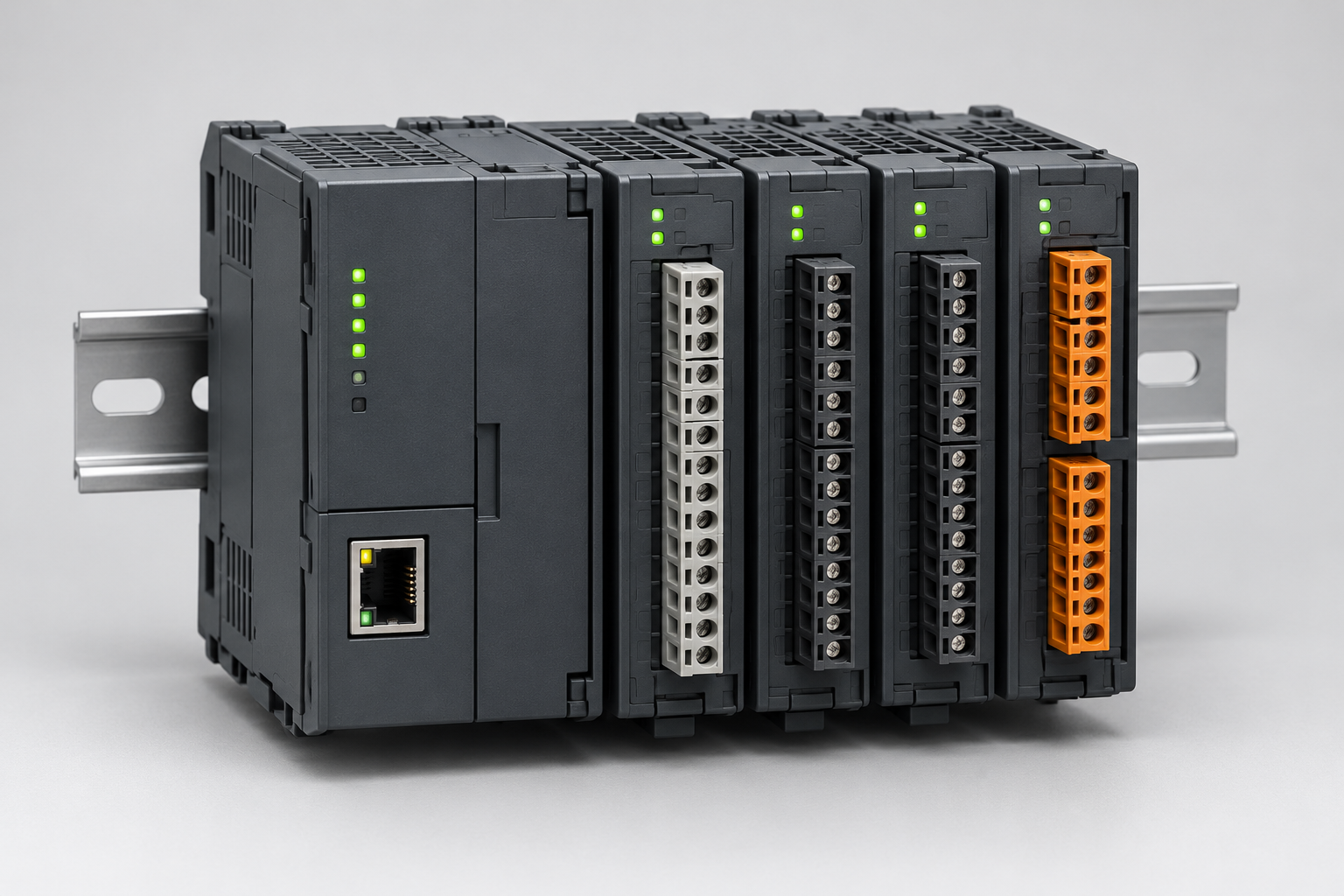
A programmable logic controller (PLC) is an industrial computer that controls machinery and processes according to programmed instructions. It receives information from connected devices, such as sensors and switches, uses that information to evaluate conditions, and sends commands to output devices, such as motors and valves. This repeating process allows equipment to respond automatically as operating conditions change.
PLCs are built to withstand demanding industrial environments and are used in applications ranging from manufacturing equipment to food processing and energy systems. (Rockwell Automation).
What Is a HMI?
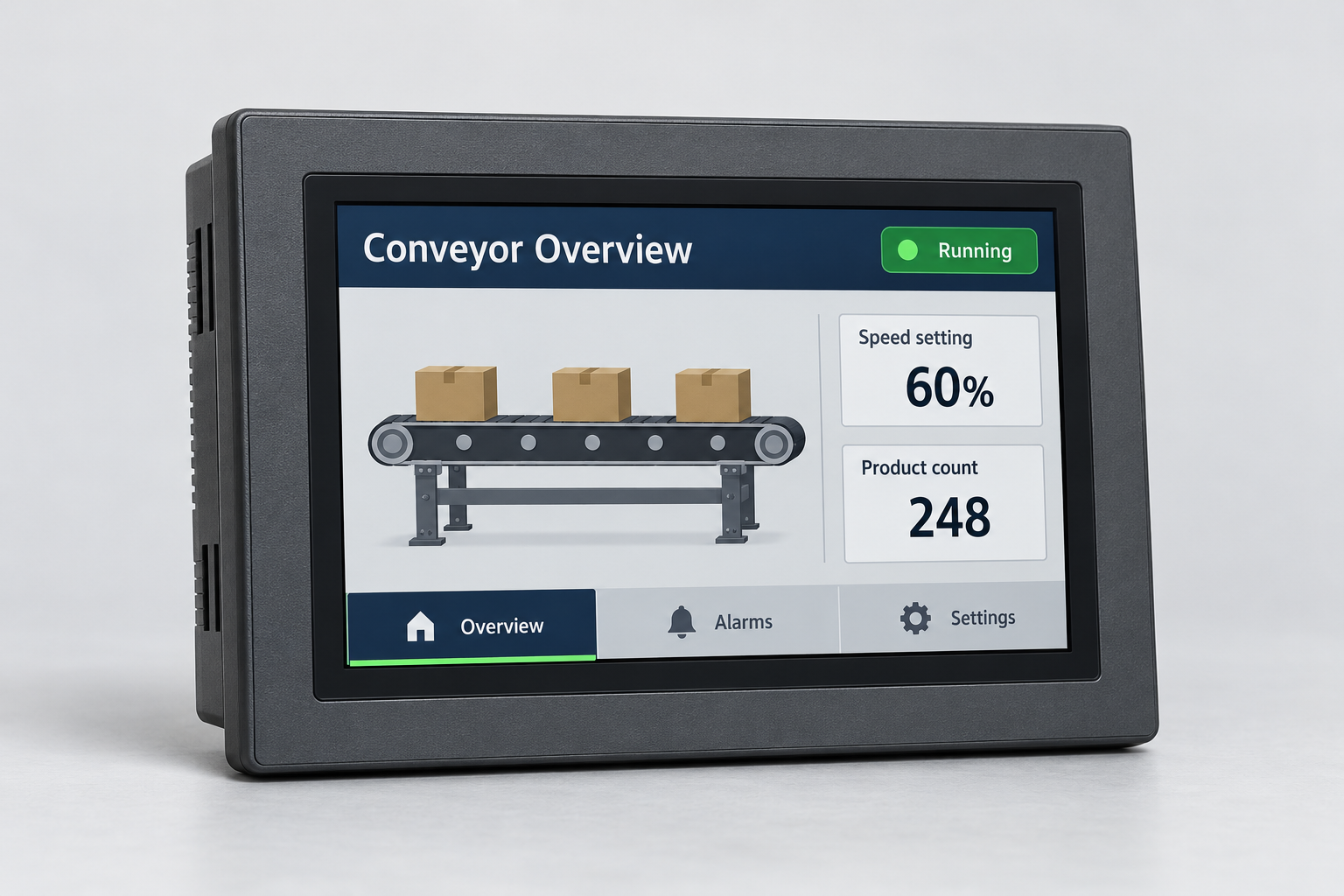
A human-machine interface (HMI) allows operators to view information about a machine or process and interact with its control system. Often presented on a touchscreen, an HMI can display equipment status, operating conditions, and alarms. Operators can also use it to enter commands or adjust settings that are communicated to the PLC. (Rockwell Automation)
The way this information is organized affects how easily operators can understand and use the interface. Explore Bevco’s HMI design principles to learn more about clear layouts and effective information displays.
PLC vs. HMI: Key Differences
| Comparison | PLC | HMI |
|---|---|---|
| Main Role | Executes programmed logic to control machinery or a process. | Allows operators to monitor the system and interact with its controls. |
| Inputs Received | Signals from sensors and switches, plus commands or settings from an HMI. | Operating data from the PLC, plus operator actions such as touchscreen selections. |
| Outputs Produced | Control signals to equipment such as motors and valves, plus status information sent to the HMI. | Visual displays of system information, plus operator commands and settings sent to the PLC. |
| Operator Interaction | Usually operates in the background. Operators may interact through an HMI or physical controls connected to the PLC. | Provides an interface, often a touchscreen, for viewing information and entering commands. |
How Do PLCs and HMIs Work Together?
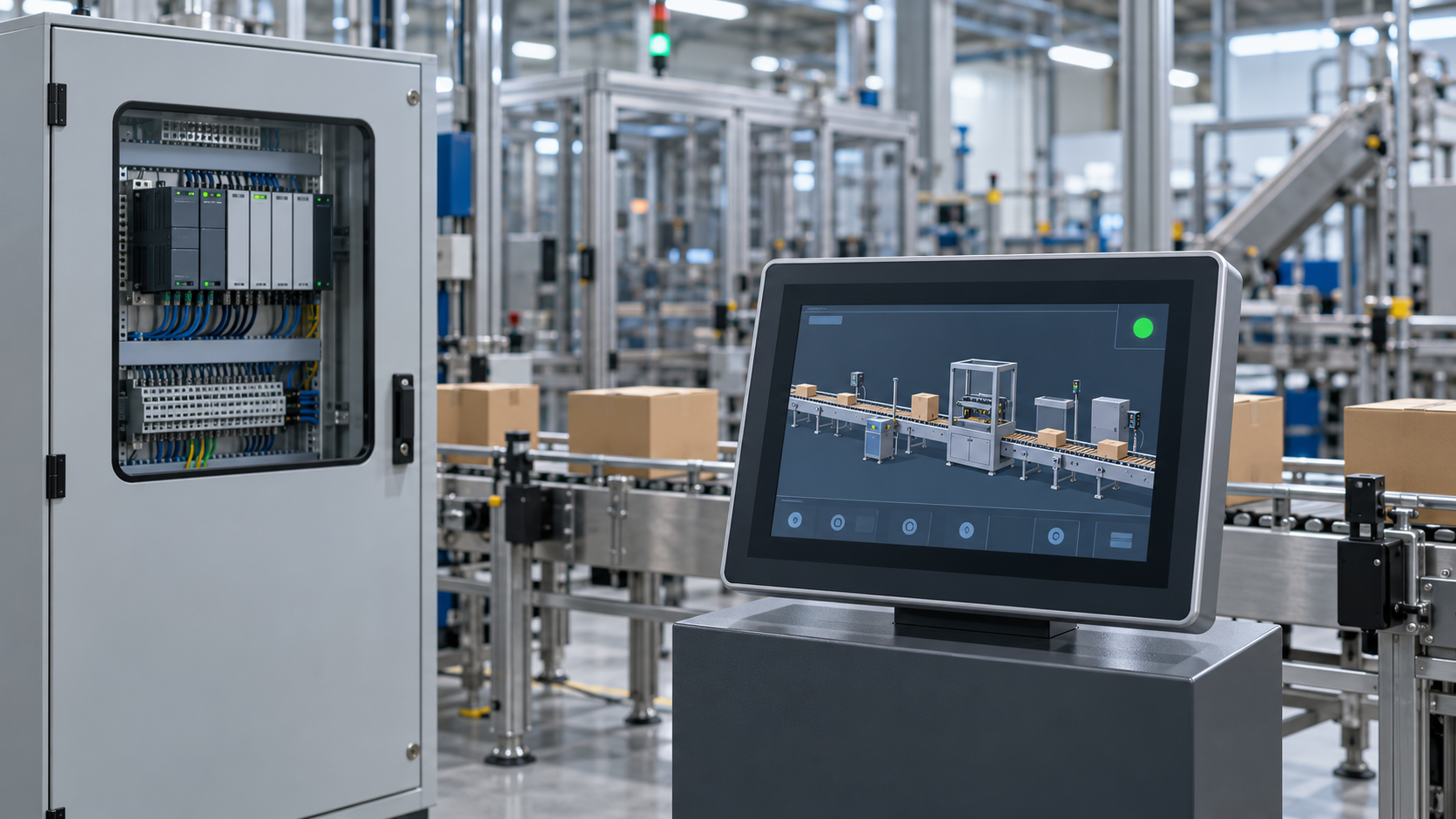
A conveyor system is a simple example of how PLCs and HMIs work together. An operator can enter a speed setting on the HMI, which sends the request to the PLC. The PLC checks the request against its programmed logic and operating conditions, then sends the appropriate command to the motor drive.
Information also travels back to the operator. The PLC sends operating data to the HMI, where the operator can see whether the conveyor is running and check for reported faults. The PLC handles equipment control, while the HMI gives the operator a way to monitor and adjust the process.
How Are PLCs and HMIs Programmed?
PLC programming defines how equipment responds to inputs and operating conditions. Engineers write instructions for tasks such as starting a motor, counting products, or controlling the order of a process. Common programming languages include Ladder Diagram, Structured Text, and Function Block Diagram. The languages available depend on the controller and its software. (Rockwell Automation)
HMI development focuses on the screens operators use. Engineers create displays, buttons, alarm messages, and fields for entering settings. They connect the relevant screen elements to controller data so the HMI can display operating information and send operator requests to the PLC. (Siemens)
The two must be coordinated. In the conveyor example, creating a speed-entry field on the HMI is only one part of the work. The PLC also needs instructions for handling that requested speed, including any programmed limits or conditions.
Common Questions about HMIs and PLCs
No. PLC programming software is used to create and modify the controllers’ instructions. An HMI application gives operators a way to view information and enter commands during production. An HMI may run on a dedicated panel or computer.
In a typical PLC based system, they perform different jobs. The HMI provides the operator interface, while the PLC executes the equipment’s control logic. Adding an HMI does not remove the need for that control function.
PLC and HMI Programming Support from Bevco
A well-designed control system brings equipment control and operator interaction together. Coordinating PLC logic with HMI screens helps operators understand what equipment is doing and make adjustments within the system’s programmed limits.
Bevco brings decades of PLC and HMI programming experience to custom control solutions across a range of platforms, industries, and applications. Contact our team to discuss your equipment, operating requirements, and programming needs.
Related Resources

What Makes a Well-Designed Industrial Control Panel HMI?
HMI design serves as the critical bridge between operators and the machinery they control. A well-designed interface not only improves efficiency but also keeps operators informed and enhances overall workplace safety. In industrial environments, effective industrial HMI design is essential to maximizing system performance, usability, and reliability. Applying proven HMI design principles and HMI design best practices ensures operators can easily monitor and control equipment with confidence. A well-executed custom HMI interface design further enhances this by tailoring the system to specific processes and user needs. Explore this guide to better understand the key principles of effective HMI design and ensure you get the most value from your custom solution with Bevco Engineering.Read More
How Designing Custom Industrial Control Panels Reduces Your Manufacturing Costs
Your goal is to improve your bottom line—but constant machine breakdowns, worker injuries, and unexpected production delays are getting in the way. When equipment stalls and operations slow down, costs quickly begin to rise. So, what’s the solution? Custom industrial control panels. Explore how designing custom industrial control panels can help reduce manufacturing costs by improving performance, minimizing downtime, increasing efficiency, and creating a safer working environment.Read More
Do You Need Custom Industrial Control Panels?
Have you been exploring standard control panel options but can’t find one that fully meets your needs? Do you operate in an industry that requires strict specifications or specialized functionality? At Bevco Engineering, we understand that custom industrial control panels are an investment. That’s why we focus on delivering custom control panel solutions designed for long-term performance, reliability, and scalability. Explore the information below to determine whether a custom industrial control panel is the right fit for your application.Read More